


Graphite Use in Nuclear Reactors
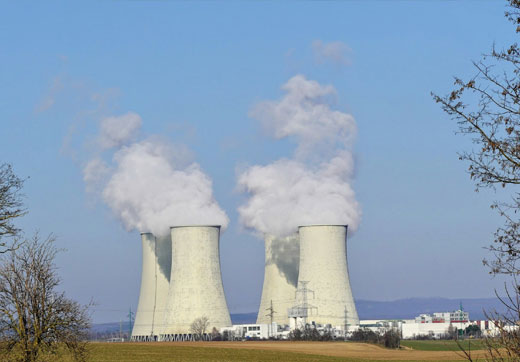
Here in Lorain, Ohio, where Semco Carbon is located, we sit between two nuclear power plants. One is about 75 miles away, up the shore of Lake Erie. Another lies about the same distance west of us. It is likely that if you live in the US, you aren’t too far from a nuclear power plant. Chances are greater that you’re getting energy from one. According to the World Nuclear Association, nuclear power accounts for about 19% of the electricity generated in the US. Graphite use in nuclear reactors is actually older than commercial nuclear power. When Enrico Fermi's team built Chicago Pile-1 in 1942 (the world's first artificial nuclear reactor) they stacked graphite blocks around natural uranium fuel to slow neutrons down enough to sustain a controlled chain reaction. That experiment, conducted under the stands of a University of Chicago football field (luckily not during a game), launched the nuclear age. Graphite was there at the beginning, and it remains central to some of the most significant nuclear developments, including graphite in sodium reactors, happening right now. Semco Carbon is proud that we played a direct role in one of these developments.
The Nuclear Graphite Moderator: What It Does
This first part you may remember from high school physics: a nuclear reactor generates heat through fission — uranium atoms splitting apart and releasing energy. The neutrons that fission produces move too fast to trigger additional fissions reliably, which is why a nuclear chain reaction doesn’t end up destroying the whole world. These neutrons do need to be slowed down, though. This is the job of a nuclear graphite moderator. When fast neutrons collide with carbon atoms in a graphite block, they lose energy, becoming "thermal" neutrons that are far more likely to sustain the chain reaction. Graphite does this job efficiently, absorbing relatively few neutrons in the process, and withstands the extreme thermal and radiation environment inside a reactor core. If you’d like a more detailed primer on nuclear fission, here’s a great one from Stanford University.
Graphite’s combination of low neutron absorption, high temperature stability, and structural durability is why this material has remained a serious engineering choice for reactor designers for eight decades.
Graphite in Sodium Reactors: A New Chapter
Most American reactors have used water, not graphite, as their moderator. But a new generation of advanced reactor designs is changing that picture, and graphite in sodium reactors represents one of the most promising configurations in development right now.
The Aalo-X reactor design uses low-enriched uranium dioxide fuel, graphite moderation, and liquid sodium to produce a thermal neutron spectrum. Aalo Atomics, the Austin-based nuclear startup behind the design, brought their Critical Test Reactor to first criticality on July 4, 2026 at Idaho National Laboratory — the largest fuel load taken critical in the DOE pilot program, by far, loaded with a full commercial-scale graphite layout. It was one of the fastest reactor builds in modern American history and a genuine milestone for advanced nuclear energy. POWER MagazineLinkedIn
Semco Carbon machined graphite components for this reactor. It's the kind of work that's difficult to overstate: precision graphite parts that had to meet nuclear-grade specifications and contribute to a first-of-kind machine that, once it goes to full power, will demonstrate the commercial viability of sodium-cooled, graphite-moderated reactors. These reactors could have many applications, such as providing electricity for data centers and military installations. You can learn more about Aalo Atomics and the reactor program at aalo.com, and watch Andrea Jokisaari, Aalo's Principal Materials Engineer, discuss the unique graphite-moderated sodium reactor design here.
Beyond the Core: Other Roles for Graphite in Nuclear Applications
The reactor core is the most visible application, but graphite appears throughout the nuclear ecosystem. High-temperature gas-cooled reactors use graphite as moderator, reflector, and structural material simultaneously, sometimes in the form of graphite pebbles containing uranium fuel, sometimes as precision-machined blocks forming the reactor's geometric core. In both cases, the dimensional accuracy of the graphite components directly affects reactor physics. If you’re machining these components, you simply cannot make a mistake.
Outside the core, graphite components support the construction and handling of nuclear systems. Graphite material can be found in furnace fixtures used in the fabrication of nuclear-grade components, for instance. Tooling for metalwork on reactor vessels and thermal management parts in the industrial systems surrounding reactor operations all involve graphite. Even spent fuel handling infrastructure involves high-temperature environments where graphite's stability is an asset.
Semco Nuclear Reactor Parts: What This Work Requires
Semco nuclear reactor parts aren't produced by general-purpose machining shops. The tolerances are tight, the material specifications are demanding, and the stakes for dimensional accuracy are sky high. A graphite component that's slightly out of spec in a semiconductor furnace is a quality problem, but in a reactor core, it's a physics problem, and not the kind from your high school textbook that you could solve.
What Semco brings to this work is decades of experience with precision graphite machining in the most demanding applications in industrial manufacturing. We also have the shop-floor discipline to hold tolerance on geometrically complex parts. Advanced nuclear reactors graphite components represent a natural extension of that expertise into one of the most consequential industries of the next several decades.
Nuclear energy is having a genuine resurgence, driven by AI data center power demand, decarbonization goals, and new reactor designs that are smaller, safer, and faster to build than the hulking giants that you’ve likely seen on a lake shore or river bank near you. Graphite is at the center of that resurgence. We're glad to be part of it.